
About Us
W. Moorcroft Limited:
a century of british art pottery
[right] .jpg) [/right]
[/right]
Although the official founding date of W. Moorcroft Ltd is 1913, the roots of the company extend back to the late 19th century. William Moorcroft (1872–1945) was born into a potting family and trained in art, studying at the Wedgwood Institute in Burslem and later at what is now the Royal College of Art in London.
In 1897, William returned to Burslem and accepted a position as a designer at James Macintyre & Co., which aimed to establish an Art Pottery Department. Not only was William an accomplished artist, but he was also a skilled potter, and he quickly developed a distinctive style and technique that became synonymous with his name.
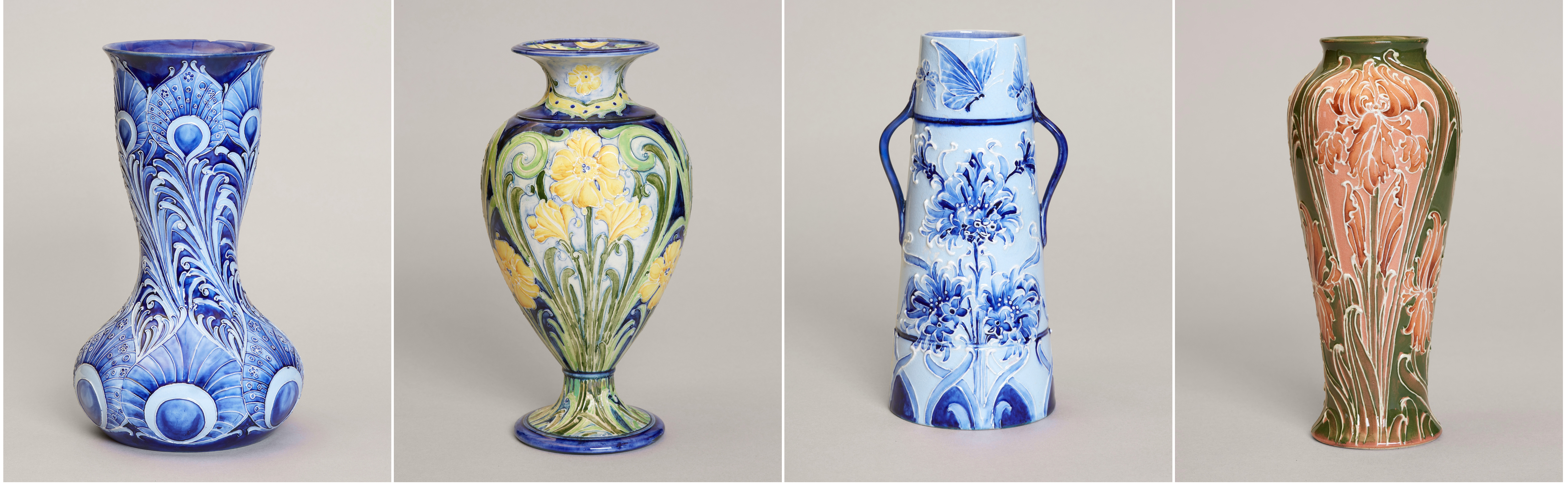
William’s first pieces of fine art pottery were introduced to the world during his time at James Macintyre & Co. His pottery gained immediate recognition, being purchased by prestigious retailers such as Liberty of London, Harrods, and Tiffany & Co. in New York. His breakthrough came with Florian Ware — richly coloured, hand-decorated art pottery influenced by Art Nouveau — which won a gold medal at the 1904 St. Louis International Exhibition. His practice of signing pieces was unconventional for the time, raising both his profile and the value of his work. Early Moorcroft is still prized by the most renowned auction houses across the world and regularly fetches high prices.
With William’s artistic success overshadowing much of James Macintyre’s other business, in 1913, William was prompted to strike out on his own and with the aid of funds from Liberty, he was able to move production of his art pottery to his own factory in Sandbach Road under the name of W. Moorcroft Ltd. Moorcroft’s factory itself was innovative for the time — a single-storey facility designed with health and efficiency in mind — and it became the centre of Moorcroft’s creative and manufacturing activity.
[clear/]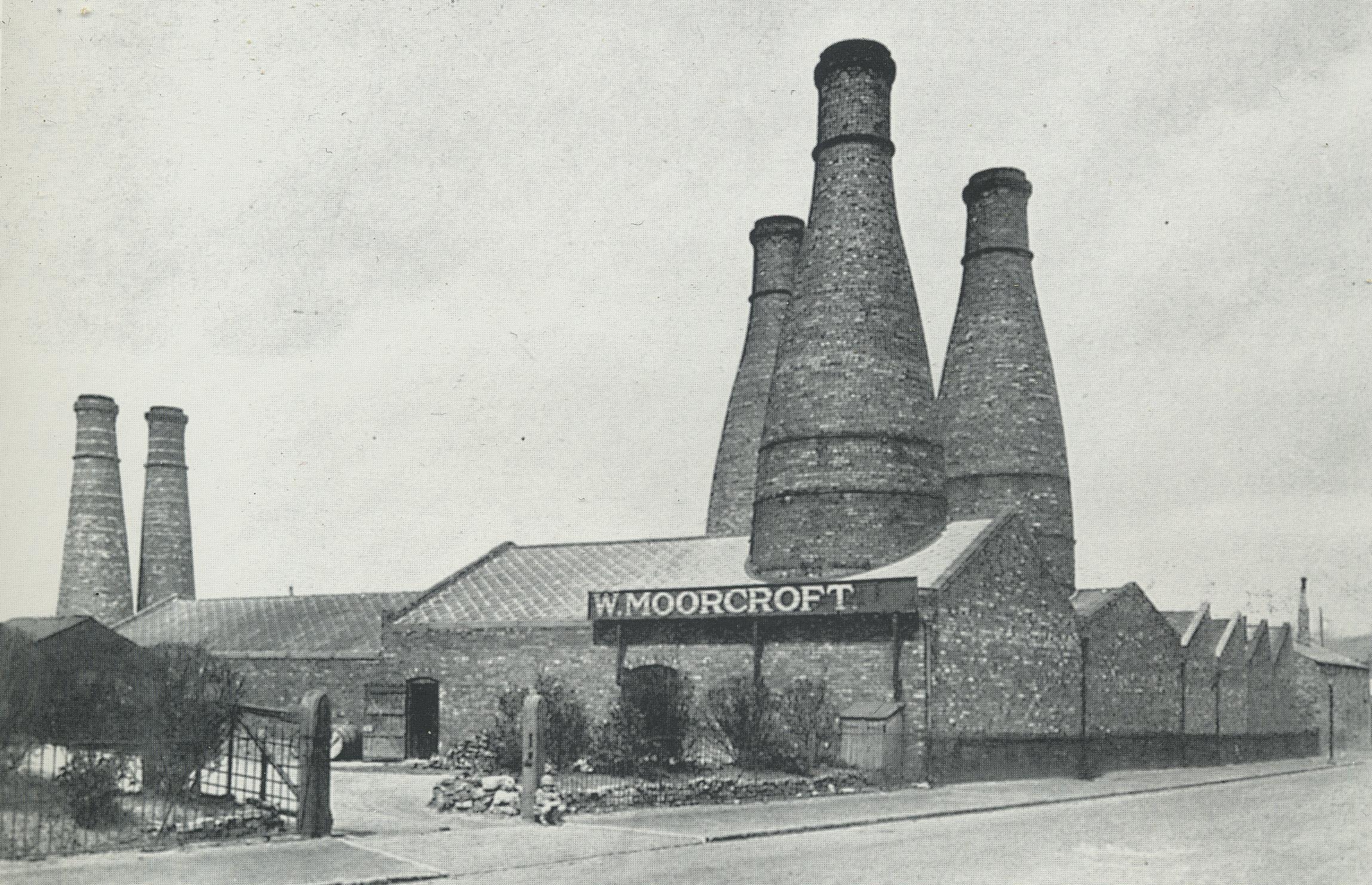
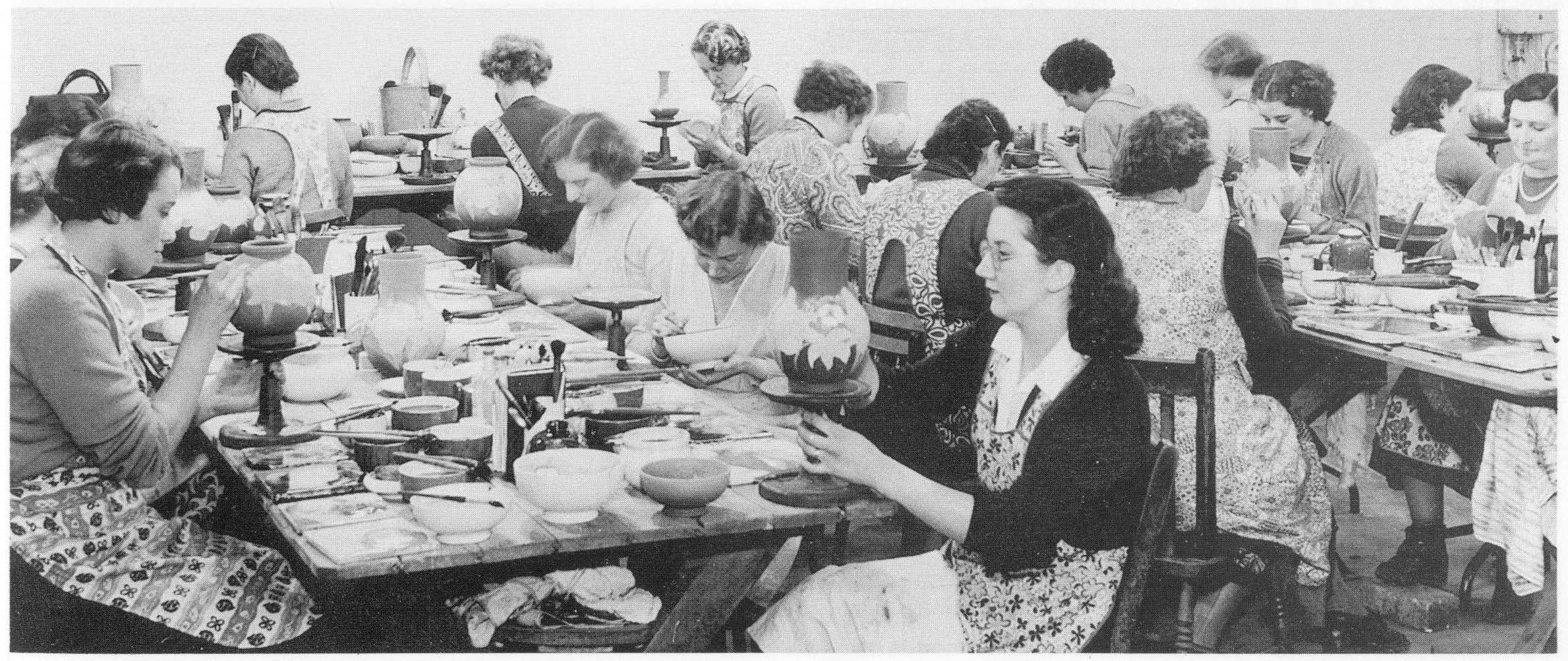
The early years were marked by the continuation of Moorcroft’s signature tubelined and hand-painted designs. The company produced both highly decorative art pieces and everyday domestic ware, though its reputation was firmly grounded in artistic, handcrafted objects. Collaboration with Liberty ensured international exposure, with pieces reaching customers in London, New York and beyond.
[right]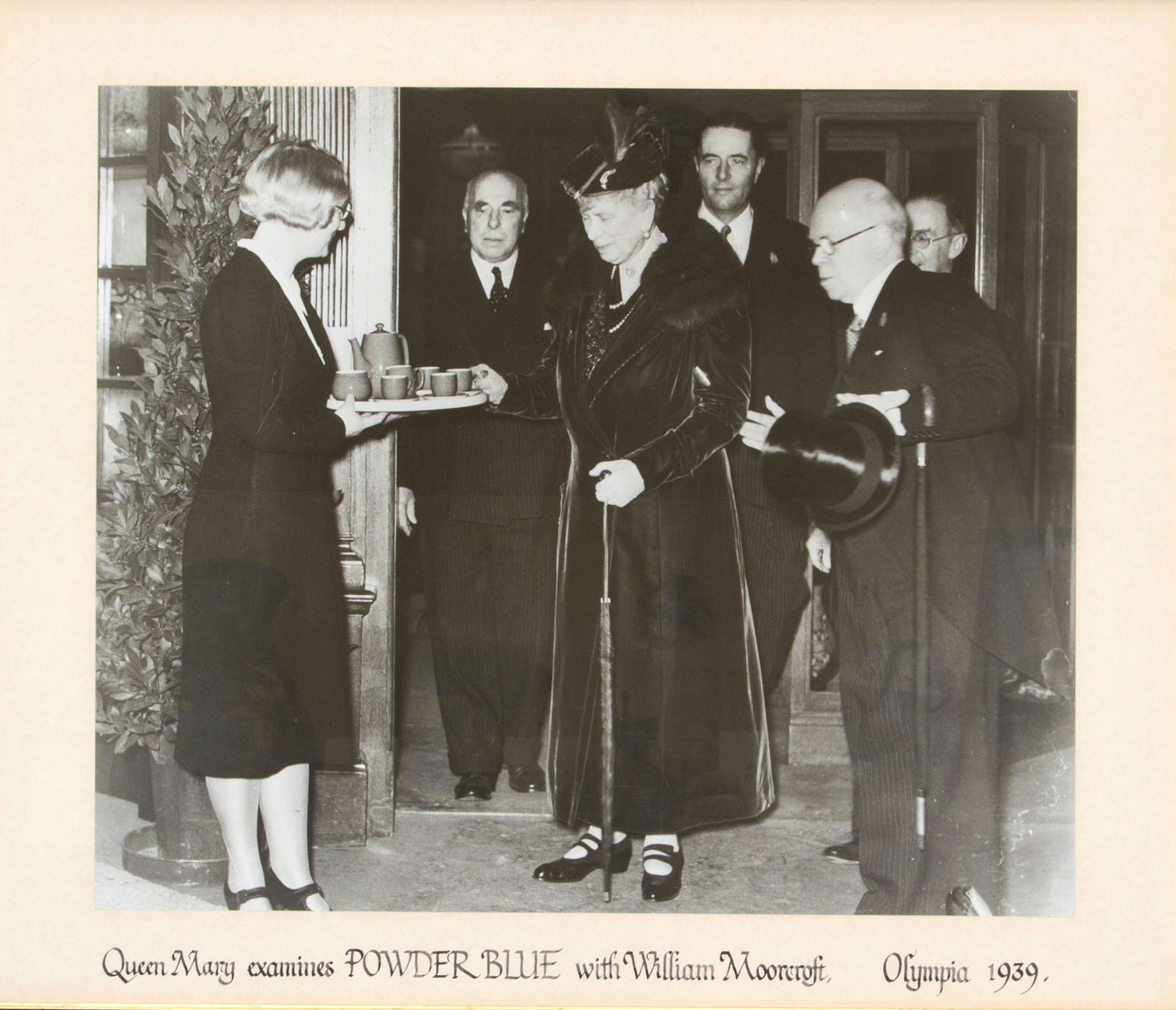 [/right]
The firm’s prestige deepened in 1928 when Queen Mary — an avid collector of Moorcroft pottery — granted the company a royal warrant as Potters to H.M. The Queen. This formal recognition amplified its reputation, linking Moorcroft’s work with the highest levels of British society and increasing demand abroad.
William Moorcroft remained in control until his death in 1945. By that time, his elder son, Walter Moorcroft, had returned from military service, had already taken an active leadership role.
[left]
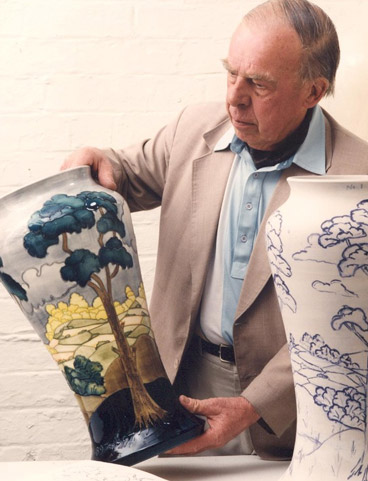
Walter continued his father’s legacy through the post-war period, guiding design and production and expanding the company’s stylistic range. The royal warrant was re-issued to him in 1946, underscoring the enduring quality and appeal of Moorcroft’s work.
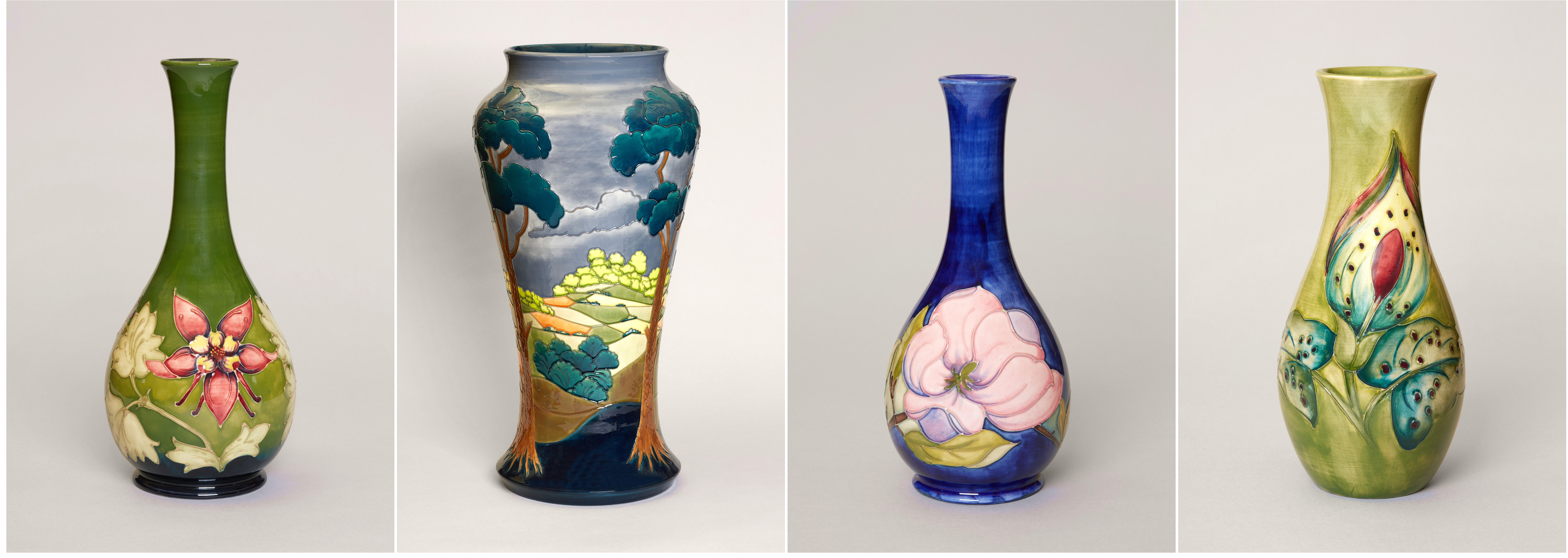
During World War II, the company — like much of British industry — contributed to the war effort by producing utility ware under government schemes, but it returned to decorative art wares after the conflict. Walter’s designs from the mid-20th century onward began to reflect wider influences, with more vibrant colours and broader pattern themes.
[right] [right]
 [/right]
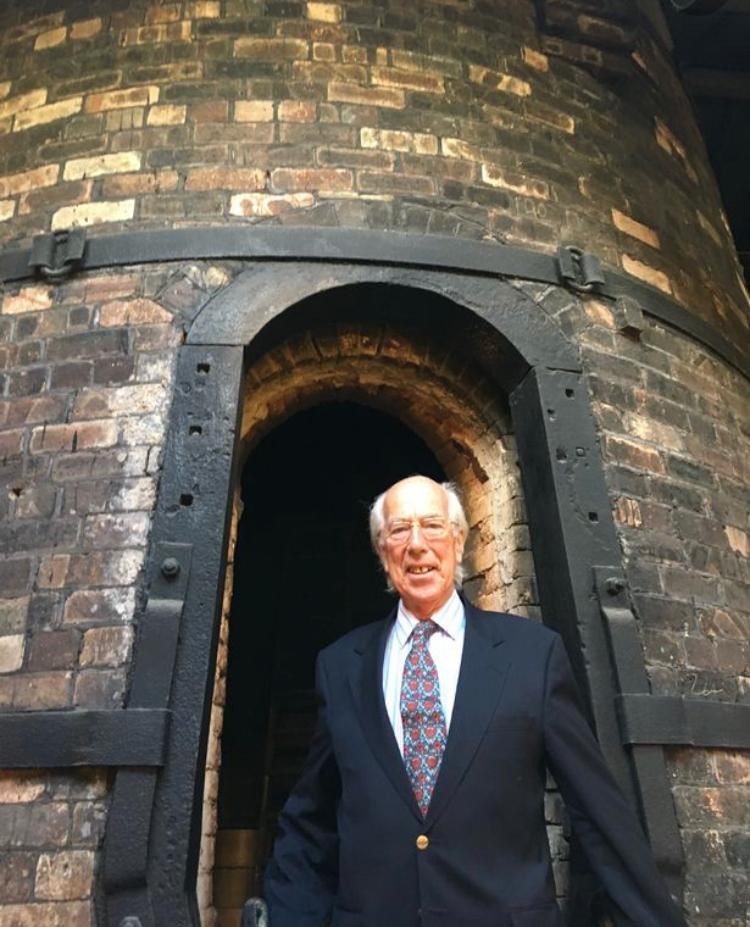
In 1962, William’s youngest son, William John Moorcroft known as John, joined the business and the family acquired full control of Moorcroft from Liberty, further consolidating its independence. While John went onto become Moorcroft’s Managing Director, Walter continued to oversee design until his retirement as Director of Design in 1987, though he contributed to new pieces into the late 1990s.
By the 1980s, Moorcroft faced significant economic challenges. Its traditional, labour-intensive techniques made it difficult to compete with mass-produced ceramics, and rising fuel costs put pressure on profitability. In 1984, part of the company was sold to the Roper Brothers, who owned Churchill China and other firms. An attempt to scale production failed, and by 1986 the Moorcroft business was sold again to private investors who sought to preserve the pottery’s artisan character while ensuring financial stability. Under new ownership, Moorcroft broadened its design base and by 1997, a dedicated Moorcroft Design Studio was established, fostering a new generation of artists who blended tradition with contemporary flair. The company celebrated what it regarded as its centenary in 1997 by tracing its heritage back to Moorcroft’s first work at Macintyre’s in 1897.
Throughout the early 21st century, Moorcroft maintained a strong global reputation. Its products continued to be cherished by collectors and pieces featured in prestigious private collections, including those of British prime ministers, American presidents and Queen Elizabeth II, who regularly acquired new Moorcroft designs for the Royal Collection.
The Sandbach Road factory also became a cultural destination, with a Heritage Visitor Centre and Museum that showcased iconic works from the company’s long history, and its Grade II-listed bottle oven was among the few surviving historic kilns open to the public.
Sadly, on 30th April 2025, after more than 100 years of continuous operation, the company ceased trading and entered voluntary liquidation, citing mounting energy costs, competition from cheaper imports, and challenging economic conditions. Fifty-seven jobs were lost, and the future of the historic business seemed uncertain. However, the story did not end there.
[right]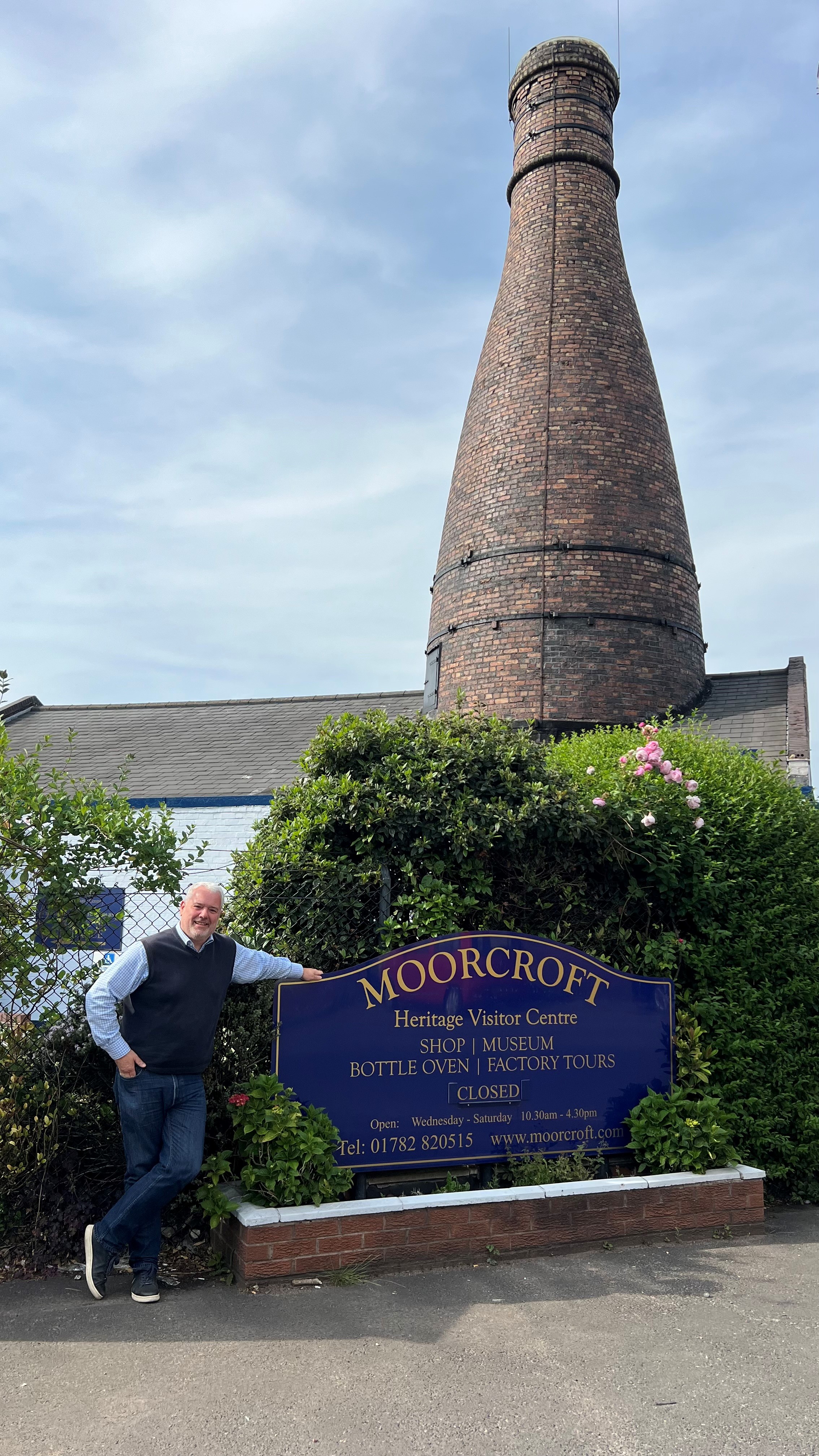 [/right]
In June 2025, Moorcroft’s assets were acquired by Will Moorcroft, the grandson of founder William Moorcroft. Will has now brought the firm back into the founding family’s control for the first time since 2006. This revival aims to preserve the brand, safeguard craft skills and continue production at its historic Stoke-on-Trent location.
Today, W. Moorcroft Ltd stands as a testament to British craftsmanship. Our history — spanning over a century — reflects resilience in the face of industrial change. Our distinctive tubelined designs and richly decorated earthenware remain prized by collectors worldwide. Although the challenges of modern manufacturing remain, Moorcroft’s revival under our founder’s grandson inspires hope that this iconic name in ceramics will continue to flourish, blending historical excellence with contemporary creativity for many years to come.